
Motor Runs but the Door Does Not Move
A stripped internal gear, disconnected trolley, broken drive component, or door hardware problem may be responsible. The contractor can isolate the failed part before recommending repair or replacement.
Serving San Antonio, Texas & surrounding areas
Calls answered around the clock
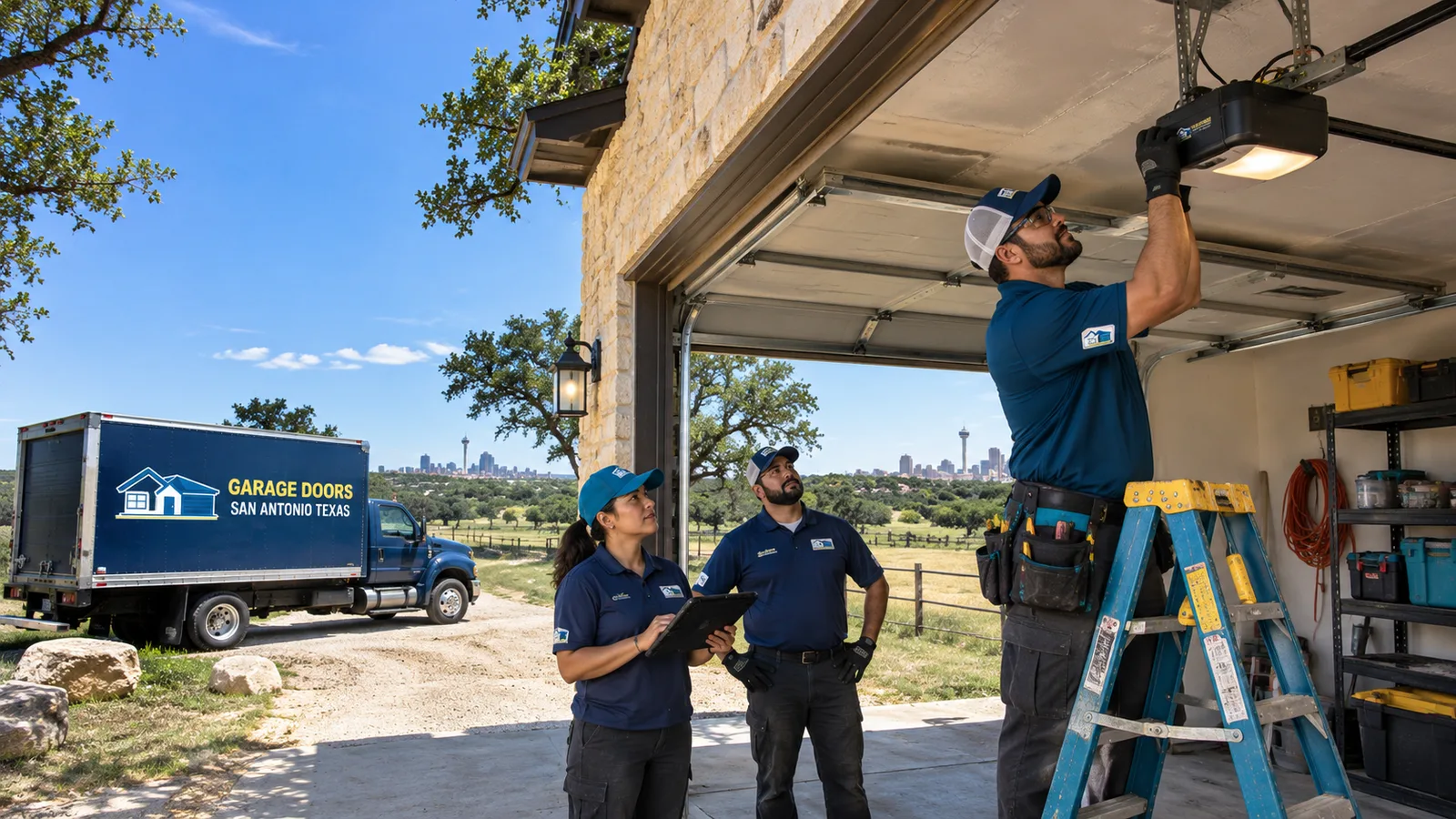
Garage door opener service in San Antonio
One call connects you with a local contractor who repairs, replaces, and sets up garage door openers.
CALL NOW: +1 210 361 9674What opener service addresses
A San Antonio garage door opener can stop working because of a failed gear, worn drive components, misaligned safety sensors, damaged wiring, a bad wall control, or a problem with the door itself. The opener may hum without moving the door, reverse before closing, operate only from the wall control, or move with unusual noise.
Garage Doors San Antonio Texas makes the search for help simpler. We connect callers with garage door companies in San Antonio, TX that handle opener repair, replacement, installation, and programming. You talk with the contractor directly, receive the quote from the contractor, and decide whether to proceed.
A useful diagnosis starts with the entire operating system. A contractor may check that the door moves freely by hand, the tracks and rollers are in working condition, the spring system balances the door, and the photo-eye sensors are aligned. An opener is designed to move a properly balanced door. It should not compensate for broken springs, binding rollers, or damaged track.
San Antonio heat can raise temperatures inside attached garages, which makes equipment condition and installation details worth checking. Dust or debris on photo-eye lenses can also interrupt the closing cycle. Local contractors work across established central neighborhoods with older garages, suburban areas such as Stone Oak with attached multi-car garages, and communities such as Alamo Ranch where taller or heavier doors may require careful opener sizing.
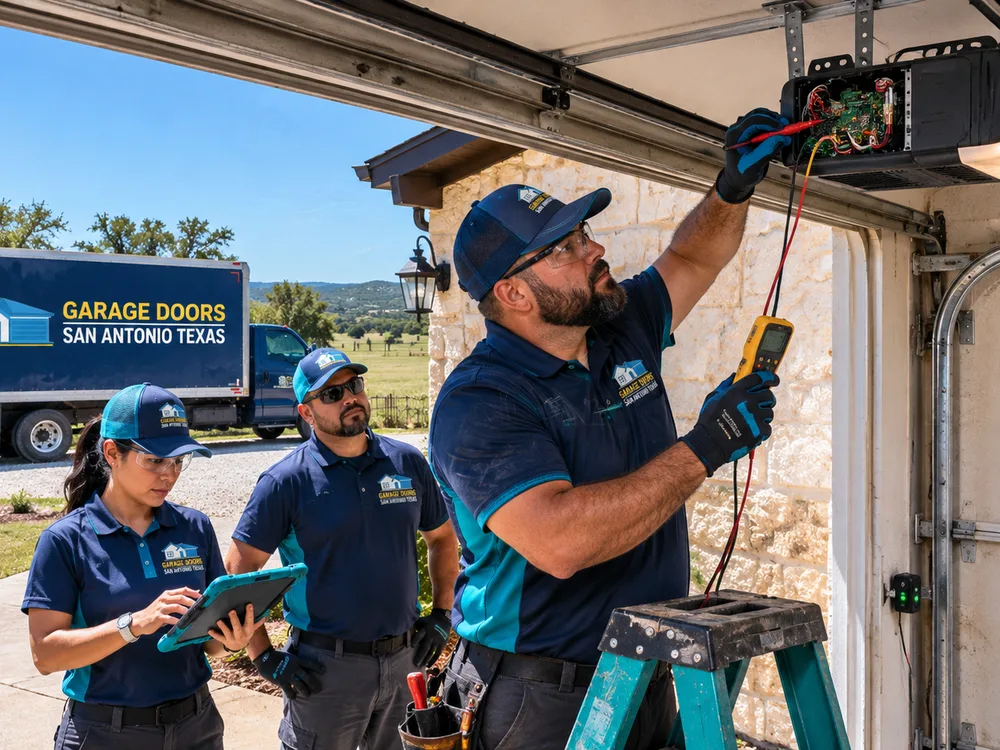
Diagnosing the complete operating system
A stripped internal gear, disconnected trolley, broken drive component, or door hardware problem may be responsible. The contractor can isolate the failed part before recommending repair or replacement.
Misaligned photo eyes, blocked sensor lenses, damaged sensor wiring, incorrect travel settings, or excess resistance in the door can trigger reversal. Safety sensors should face each other near the bottom of the tracks.
The contractor can test transmitters, replace compatible controls, reprogram remotes and keypads, and check whether the opener's receiver or logic board is responding.
Chain slack, a worn trolley, loose mounting hardware, poor rail alignment, or a binding door can produce scraping, rattling, or jerking. The source should be identified before adjustments are made.
Replacement work can include removing the old motor unit, installing the rail and drive assembly, mounting controls and sensors, setting travel and force limits, and programming compatible accessories.
Compatible opener models may support app controls, status alerts, integrated lighting, battery backup, or vehicle pairing. The contractor can explain which functions depend on the selected model and home Wi-Fi.
From call to contractor
Call the number shown and enter your ZIP code. You are connected directly with a local garage door contractor who serves that area.
The person you speak with is the contractor. Discuss the opener's symptoms, door size, drive type if known, wall control behavior, and any remote or keypad issues.
The contractor determines what needs attention and provides the quote. Ask whether the recommendation covers a component repair, new opener, controls, sensors, programming, or related door adjustments.
You review the scope and decide whether to proceed. If work is scheduled, confirm equipment details, access requirements, disposal of replaced parts, and any manufacturer warranty terms.
Stop working through contractor listings. One call connects you with a local garage door opener contractor who serves San Antonio and the surrounding area.
CALL NOW: +1 210 361 9674Sensors, rail and controls
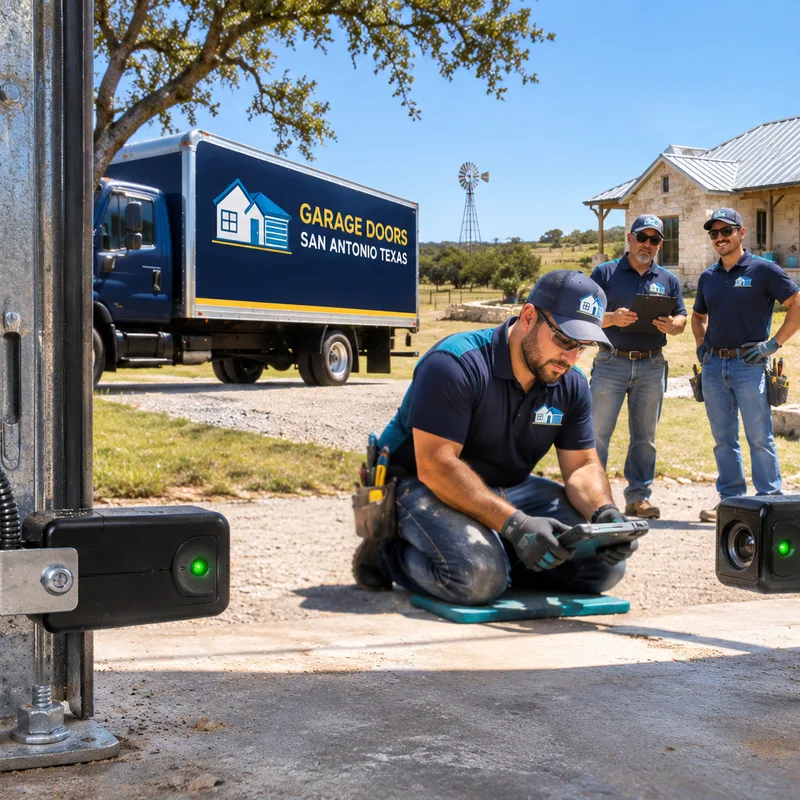
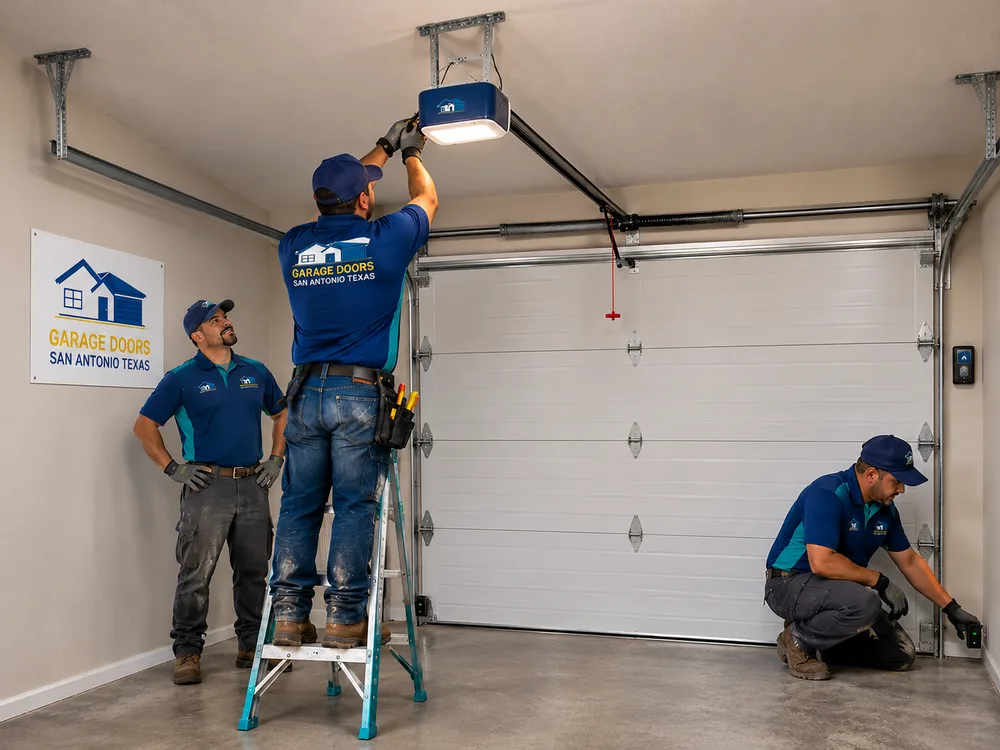
Clear answers before you decide
The choice depends on the failed component, the opener's overall condition, parts availability, and the functions you want. A contractor can test the motor, drive assembly, logic board, controls, sensors, and door balance before explaining both options. Replacement may make more sense when major electronic or mechanical components have failed or when the existing unit lacks required safety equipment.
The contractor should check whether the garage door is balanced and moves smoothly by hand. Springs, rollers, hinges, tracks, cables, and door weight all affect opener operation. Installing a new motor on a binding or poorly balanced door can leave the original operating problem unresolved.
The suitable drive type depends on the door, garage layout, and noise preference. Belt drives are often selected where quiet operation matters, chain drives use a metal chain and require proper tension, and screw or direct-drive designs have different maintenance and compatibility considerations. The contractor can compare models sized for the door.
A remote-only failure often points to the transmitter battery, lost programming, a lock setting on the wall console, radio interference, or a receiver problem. The contractor can test each control separately and confirm whether existing remotes are compatible with the opener.
Compatibility must be confirmed by the installer rather than assumed. Rails, trolleys, safety sensors, wiring, and controls may be specific to a manufacturer or product line. Using the components specified for the new opener helps the contractor set travel, force, and safety reversal correctly.
The installer mounts the motor and rail, connects the trolley to the door, installs or positions the photo-eye sensors, wires the wall control, and programs the travel limits. The contractor then tests manual release, opening and closing cycles, safety reversal, remotes, keypads, lighting, and any compatible connected controls.
Ask for the opener model, drive type, lifting compatibility, included controls, battery backup availability, connected functions, and the exact work included in the quote. You should also ask about manufacturer warranty terms, labor terms offered by the contractor, disposal of replaced equipment, and future maintenance.
Your next conversation starts here
Call and get connected with a local contractor who handles garage door opener repair and setup in the San Antonio area. You speak with the contractor directly, review the proposed work, and decide what happens next.
CALL NOW: +1 210 361 9674